Boom lifts represent one of the most technologically demanding segments of the aerial work platform (AWP) industry. They are also a core investment for equipment rental companies. However, traditional boom lift designs have long faced challenges associated with complex structures, international patent barriers, expensive spare parts, and difficult maintenance.
Rather than following existing designs or relying on conventional development approaches, DINGLI began investing in a full-range modular boom lift platform more than a decade ago, covering working heights from 16 to 60 meters.
This was more than a product upgrade. It represented a fundamental rethinking of equipment design, manufacturing, and lifecycle cost management, with one clear objective: helping customers reduce operating costs and improve efficiency.
1. Modular Engineering: One Platform, Multiple Models
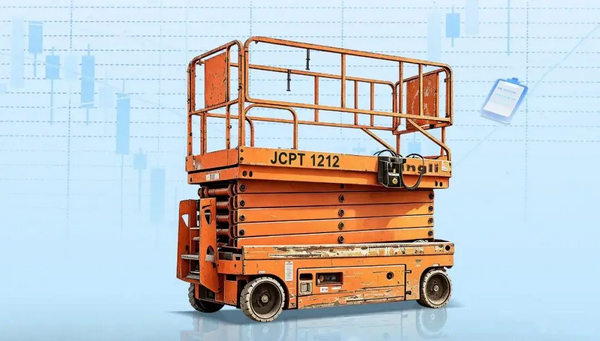
Traditionally, boom lifts with different working heights and power configurations often use entirely different component systems. For rental companies, this means maintaining large spare parts inventories, training multiple maintenance teams, and managing increasingly complex equipment fleets.
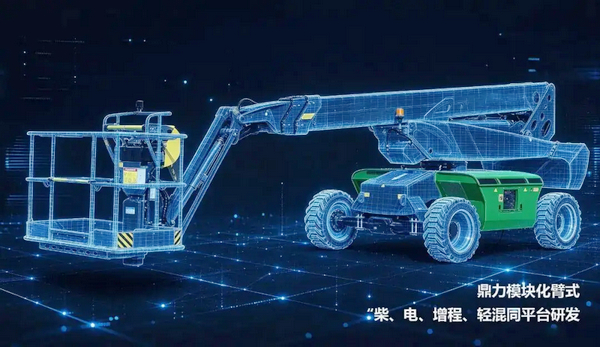
DINGLI addresses these challenges through a unified modular development platform covering diesel, electric, range-extended, and mild-hybrid power configurations.
Across its 16–60-meter boom lift range, the machines share the same underlying design architecture, achieving:
-
More than 85% commonality in components
-
More than 80% commonality in structural parts
For rental operators, this means a single maintenance system and a standardized inventory of commonly used spare parts can support an entire product range.
By adopting consistent family-based engineering rather than assembling individual models with separate designs, DINGLI also maintains uniform safety standards and reliability while significantly reducing additional investment in fleet management and maintenance.
2. Smart Manufacturing: Standardization Drives Production Efficiency
The advantages of modular engineering extend beyond product design and into manufacturing.
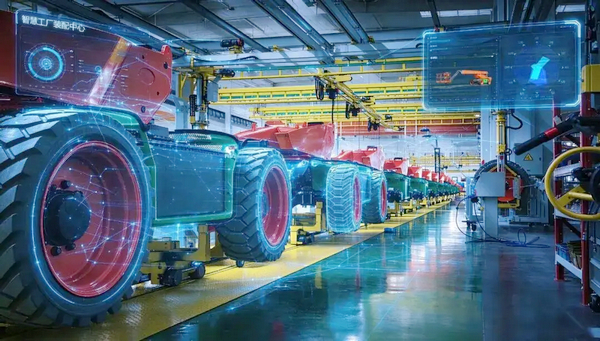
At DINGLI’s Future Factory, extensive component standardization eliminates frequent tooling changes and complicated production transitions, enabling smoother and more efficient manufacturing processes.
The company reports that the complete intelligent manufacturing process for a modular boom lift, from raw materials to finished equipment, has been reduced to less than 25 minutes.
Supported by big data and artificial intelligence, DINGLI’s flexible manufacturing system allows different working-height models and power configurations to be produced on the same production line with seamless transitions.
High component commonality combined with flexible manufacturing helps minimize manual intervention and assembly errors.
In addition, structural components across the product range are manufactured through an integrated, closed-loop in-house production process, providing greater control over manufacturing precision, consistency, and product quality.
3. Quality Assurance: Global Tier-One Components and Scaled Manufacturing
The economies of scale created by modular design also strengthen DINGLI’s procurement capabilities and supply-chain competitiveness.
With highly standardized core components, the company benefits from centralized purchasing and stronger cooperation with leading global suppliers. These advantages are reinvested in higher-quality equipment configurations.
DINGLI incorporates components from internationally recognized manufacturers, including:
-
Dana axles from the United States
-
Rexroth drive systems from Germany
-
DEUTZ engines from Germany
Combined with standardized precision assembly at the Future Factory, these components help ensure consistent equipment quality and long-term reliability.
The modular platform has also supported a major breakthrough in lifting performance. DINGLI has become one of the first manufacturers globally to achieve a 454 kg platform capacity throughout the full working range of its boom lifts.
This achievement addresses a longstanding industry challenge: balancing maximum working height with high platform load capacity.
Through an optimized low-mounted structural design and the use of high-strength steel, DINGLI delivers a 454 kg rated platform capacity while maintaining excellent machine stability and precise control.
The company's global supplier partnerships also strengthen spare parts availability. Whether equipment operates in China or overseas markets, customers can access original-equipment-standard replacement parts and professional service support, reducing parts-related downtime.
This reliability also contributes to stronger used-equipment residual values and improved resale liquidity.
4. Asset Value: Higher Residual Value and Easier Resale
In an increasingly competitive rental market, residual value and resale liquidity are essential factors in calculating total equipment lifecycle returns.
Traditional boom lifts can become difficult to maintain when older models are discontinued and their dedicated spare parts become unavailable. This can significantly reduce resale value and make used equipment harder to circulate.
DINGLI’s modular design addresses this problem by allowing dozens of models to share a common component system.
The resulting standardization improves spare parts availability, simplifies maintenance, and helps maintain consistent equipment quality throughout the product lifecycle.
Whether equipment is resold domestically or exported to international markets, compatible replacement components are easier to source, reducing concerns about discontinued parts and declining asset value.
5. Diesel-to-Electric Conversion: Extending Equipment Lifecycle
As environmental regulations become increasingly stringent and demand for green construction equipment continues to grow, DINGLI has introduced another innovation based on its modular platform: modular diesel-to-electric conversion technology.
Instead of replacing the entire machine, the system allows existing diesel-powered boom lifts to be upgraded to electric operation through the replacement of designated hardware modules.
This approach offers several advantages:
-
Reduces the investment required for equipment electrification
-
Extends the useful service life of existing machines
-
Helps existing fleets adapt to stricter environmental requirements
-
Supports higher rental utilization rates
-
Helps preserve the residual value of existing equipment
By making powertrain upgrades possible without replacing the main machine structure, DINGLI provides rental companies with a more flexible and economical pathway toward fleet electrification.
Modular Design Creates Long-Term Value
DINGLI’s modular boom lift strategy goes far beyond simplifying product structures. It connects product engineering, intelligent manufacturing, global supply chains, maintenance efficiency, and asset value into one integrated system.
From 16-meter to 60-meter models, the shared platform reduces fleet complexity. Flexible manufacturing improves production efficiency, global Tier-One components support reliability, and modular electrification technology creates new opportunities for extending equipment lifecycles.
For equipment rental companies and fleet operators, the real value of modular design lies not only in the machine itself, but also in lower total ownership costs, improved equipment availability, easier maintenance, and stronger long-term asset returns.