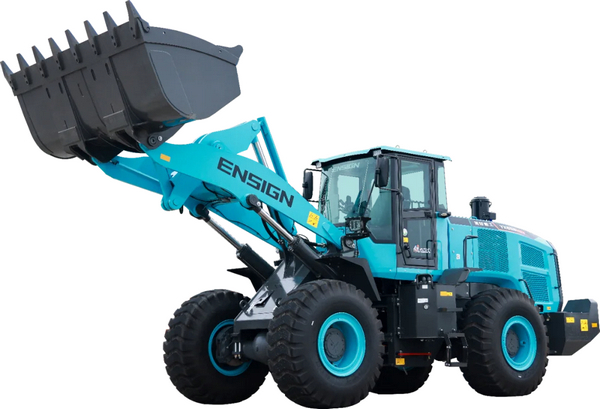
Winter brings additional challenges for hybrid wheel loaders, including low-temperature engine starts, reduced battery charging performance, increased hydraulic oil viscosity, and the risk of frozen condensate in braking and cooling systems.
Proper seasonal maintenance is essential to ensure reliable operation, protect key components, and maintain productivity in cold weather. Here are the key winter maintenance practices for hybrid wheel loaders.
1. Range Extender System Maintenance
The range extender system requires special attention during winter to ensure reliable starting, efficient power generation, and proper emissions control.
Choose the Right Diesel Fuel
Select diesel fuel according to the lowest expected local temperature, using appropriate grades such as -10, -20, or -35 diesel.
Keep the fuel tank as full as practical to reduce condensation and water accumulation. Drain the fuel-water separator daily to help prevent fuel waxing, filter blockage, and freezing.
Replace Engine Oil Before Winter
Use winter-grade engine oil such as 0W-40 or 5W-40, provided it meets the engine manufacturer's specifications. Lower-temperature viscosity helps reduce resistance during cold starts and provides effective engine lubrication.
Check Antifreeze Coolant
The coolant's freezing point should be at least 10°C below the local minimum ambient temperature. In northern regions, coolant rated for approximately -35°C to -45°C may be appropriate, depending on local conditions.
Never mix coolants from different brands or formulations unless the manufacturer explicitly confirms compatibility.
Monitor the Exhaust Aftertreatment System
Pay close attention to the exhaust gas recirculation (EGR), diesel oxidation catalyst (DOC), and diesel particulate filter (DPF) systems.
-
Avoid frequent, short-duration starts and stops when the range extender is cold, as incomplete combustion can increase carbon deposits.
-
Do not force high-speed power generation immediately after a cold start. Allow the coolant temperature to rise before operating under heavy loads.
-
Check DPF differential pressure daily and monitor dashboard warnings carefully.
Passive DPF regeneration may become less effective in winter. Prompt attention to warning signals helps prevent excessive soot accumulation and potential filter blockage.
2. Traction Battery System Maintenance
Low temperatures affect battery charging performance and available power, making proper battery management particularly important.
Charge the Battery Before Shutdown
Where the manufacturer's operating procedures permit, charge the battery while it is still warm after work. Use an external charging station or the range extender's charging mode, aiming to bring the state of charge (SOC) to approximately 80% before shutdown.
To reduce charging time at the end of a shift, operators can gradually reduce the machine's workload before finishing work, lowering battery discharge power and allowing more time for charging.
The battery management system may limit charging power at low temperatures. This is a normal protective measure.
Never connect a charging gun when the charging interface is frozen or covered with condensation. Ensure the connector and charging port are dry and free of ice before charging.
Battery Storage During Extended Downtime
For long-term parking:
-
Prefer indoor storage where possible.
-
Maintain battery SOC at approximately 50%–70%.
-
Power on the system monthly for inspection and, if necessary, use the range extender to recharge the battery according to the manufacturer's instructions.
-
Check that battery enclosure drainage holes remain clear and free from accumulated water or ice.
These practices help protect battery health and reduce cold-weather operating risks.
3. Hydraulic, Transmission and Lubrication Systems
Low temperatures increase oil viscosity, which can slow hydraulic response and increase component wear during cold starts.
Hydraulic Oil
Consider using HV46 low-temperature anti-wear hydraulic oil, provided it meets the machine manufacturer's specifications.
After powering on the machine, operate the boom and bucket repeatedly without load for approximately 3–5 minutes to warm the hydraulic system. Begin normal work only after the oil temperature has risen sufficiently.
Avoid demanding movements or heavy loading while the hydraulic oil is still excessively cold, as this can damage valve assemblies and seals.
Drive Axle and Transmission Oil
Check the oil levels in the drive axles and transmission. Inspect the oil for signs of water contamination or emulsification, which can compromise lubrication and damage internal components.
Lubricating Grease
Replace grease at applicable lubrication points with a suitable low-temperature formulation.
For machines equipped with centralized lubrication systems, use NLGI 00 or NLGI 0 low-temperature grease, as specified by the manufacturer.
4. Brake System Maintenance
Hybrid wheel loaders commonly use air-brake systems, making moisture control essential during freezing weather.
-
Drain accumulated condensate from the air reservoirs daily.
-
Inspect the air dryer and ensure it is functioning correctly.
-
Check for signs of moisture accumulation or freezing in the air lines.
-
Inspect brake fluid where applicable and replace it when necessary according to the manufacturer's maintenance schedule.
Water in the air system can freeze and obstruct airflow, potentially compromising braking performance. Regular drainage and air-dryer maintenance are therefore critical for winter safety.
5. Cooling System Maintenance
Hybrid wheel loaders often use an integrated cooling module incorporating several heat exchangers, including:
-
Engine oil cooler
-
Engine coolant radiator
-
Hydraulic oil cooler
-
Electric motor and power electronics cooling components
Although cooling demand may be lower in winter, snow, ice, coal dust, and debris can still obstruct airflow and cause localized overheating.
Clean the cooling module's exterior surfaces daily and inspect the electronic cooling fans to ensure their normal airflow and reversing functions, where equipped.
Ice accumulation can block parts of the radiator, disrupt coolant circulation, and create abnormal temperature differences across the cooling system. Keep the airflow passages clear and inspect the cooling module regularly.
6. Five Winter Operating Precautions
01. Avoid Heavy Loads Immediately After a Cold Start
Do not immediately demand high-power generation from the range extender or begin heavy bucket loading while the engine and battery systems are cold. Allow the machine to warm up according to the manufacturer's procedures.
02. Never Mix Different Coolant Types
Engine coolant and coolant used in electric-drive or battery thermal-management circuits may have different specifications. Never mix them; incompatible fluids can cause deposits, corrosion, or damage to liquid-cooled components.
03. Do Not Neglect Battery Thermal Management
Servicing the engine alone is insufficient. Battery thermal-management systems must also be inspected to reduce the risk of low-temperature power limitation and accelerated battery degradation.
04. Avoid Frequent Short Operating Cycles
Repeated short starts and stops in winter can increase carbon deposits in the DPF. Allow the range extender to reach suitable operating conditions and follow the recommended regeneration procedures.
05. Use the Engine Heating System for Cabin Warmth
On hybrid models that use engine coolant for cabin heating, switch on the engine heating function and follow the manufacturer's instructions to ensure adequate cabin warmth.
Keep Your Hybrid Wheel Loader Ready for Winter
Winter maintenance for hybrid wheel loaders requires a coordinated approach covering the range extender, traction battery, hydraulic system, brakes, and cooling module.
By selecting suitable fluids, managing battery temperature and charging, preventing moisture-related failures, and following proper warm-up procedures, operators can improve equipment reliability and maintain safe, efficient performance throughout the winter season.