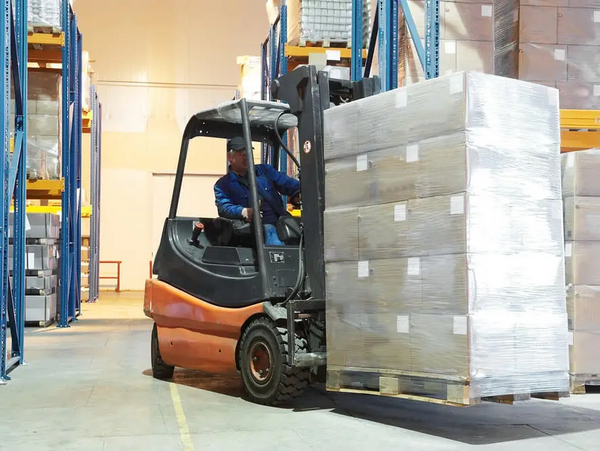
Operating a forklift requires professional qualifications—and for good reason. Forklifts are often driven through narrow warehouse aisles and busy factory workshops while carrying heavy loads. High maneuvering precision is essential to ensure smooth and safe material handling. Proper forklift operation depends not only on driving skills, but also on safety awareness and operational discipline.
Why Is a Forklift License Required?
To an outside observer, driving a forklift may seem simple. In reality, forklift operation involves significant safety risks. Inexperienced operators who turn too sharply or drive too fast can easily cause accidents. In addition, tasks such as handling loads at height require specialized skills and training.
For this reason, certified forklift operator qualifications are mandatory. Anyone wishing to operate a forklift must complete professional operator training and obtain the appropriate certification.
Forklift operator qualifications are generally divided into three categories:
- Class I WJO: Permits operation of counterbalance forklifts, specialized trucks, reach trucks, and telescopic handlers; valid for 5 years
- Class II WJO: Covers a narrower range of forklift types; valid for 10 years
- Class III WJO: Basic qualification with more limited operating scope; valid for 10 years
Pre-Operation Inspection Checklist
Before starting work, forklift operators should complete several important inspections to ensure the vehicle is safe and ready for operation.
Daily Inspection Includes:
- Conduct a visual inspection for mechanical damage or leaks
- Check fluid levels such as coolant, brake fluid, and engine oil
- Verify fuel level or battery charge, depending on whether the forklift is diesel or electric
- Ensure the brakes, clutch, and transmission controls function properly
- Test lights, turn signals, and warning horns
Operators should also adjust the seat properly to maintain comfort and visibility during operation. Before moving the vehicle, always fasten the seat belt.
In addition, operators must ensure that all required inspection and certification documents remain valid.
Forklift Driving and Steering Safety
Driving a forklift requires concentration, precision, and smooth control. Unlike passenger vehicles, forklifts are typically equipped with rear-wheel steering, resulting in different handling characteristics. Even experienced car drivers require dedicated forklift training to operate safely.
Recommended Speed Limits
Forklift speed limits are generally stricter than road vehicle regulations:
- 18 km/h on straight sections
- 12 km/h near production areas and factory zones
- 6 km/h inside workshops
- 3 km/h in pedestrian areas or spaces with limited visibility
Key Safe Driving Practices
Safe forklift operation involves more than controlling speed. Operators should also pay attention to the following:
- Keep forks in the correct transport position: 10–20 cm above ground with the mast tilted backward
- Drive carefully on slopes, especially during startup
- Always keep both hands on the steering wheel during operation
- Never exceed the forklift’s rated load capacity or load dimensions
- Ensure the load’s center of gravity remains stable and centered
Proper training, regular inspections, and disciplined operation are the foundation of safe and efficient forklift use in industrial and warehouse environments.